Where is Cu Chi Tunnels?
This unique historical site is located in Phu Hiep hamlet, Phu My Hung commune, Cu Chi district, about 70 km northwest of Ho Chi Minh city center.
At the beginning, the tunnel system was built in Tan Phu Trung and Phuoc Vinh An communes, Cu Chi district. The name “Cu Chi Tunnels” also appeared from there. The tunnels at this time only had short sections with a simple structure, used as hiding places for officers and soldiers, and hidden secret documents.
Later, the tunnels were reinforced and expanded to all 6 communes in the north of Cu Chi district, forming a continuous, complex, and more complete bunker system, so that Viet Minh forces could take shelter. communicate, and support each other.
Today, the vestiges of the tunnels are preserved in two areas: Ben Duoc, in Phu My Hung commune, and Ben Dinh, in Nhuan Duc commune, directed by the Management Board of Cu Chi Tunnels Historic Site under the Ministry. Ho Chi Minh City Military Command. In addition to the tunnel system, the relic site also recreates the liberated area, and the eco-tourism area along the Saigon River.
Instructions on how to go to Cu Chi Tunnels from Ho Chi Minh City Center
From the center of Ho Chi Minh City, you can go to Cu Chi Tunnels Historic Site by various means.
1.Buses
This is a public transport chosen by a large number of young people because of its convenient transportation route and low cost. You can take the bus at Ben Thanh station and choose one of the following two routes:
- To go to Ben Duoc tunnels:
You take bus number 13 (Ben Thanh – Cu Chi) or car number 94 (Cho Lon – Cu Chi) to get to Cu Chi wharf.
Then, transfer to car number 79 (Cu Chi – Dau Tieng) to go to Ben Duoc tunnels.
- To go to Ben Dinh Tunnels:
You take bus number 13 (Ben Thanh – Cu Chi) or car number 94 (Cho Lon – Cu Chi) to get to An Suong wharf.
Then, transfer to bus number 122 (An Suong – Tan Quy) to Tan Quy wharf.
Finally, take bus 70 (Tan Quy – Ben Suc) to reach the Ben Dinh tunnels.
2.Motorcycle or car
Some backpackers and groups often choose to travel by motorbike or car to Cu Chi Tunnels along the route Truong Chinh – An Suong Crossroads – Hoc Mon – Provincial Road 15 – Cu Chi Tunnels. Going by private vehicle, you will have the opportunity to enjoy the scenery, or eat at the restaurants along the way, especially the opportunity to visit the Wildlife Rescue Station located at Provincial Road 15, An Nhon Tay Commune, Cu Chi district, very close to Ben Dinh tunnels.
However, the road is quite long and it will take about 2 hours for transportation, so we recommend you to choose the bus as above, or rent a car with a private driver to take you to the Monument Cu Chi Tunnels safely and conveniently. Another interesting thing is, you can visit Cu Chi Tunnels by speedboat too.
Cu Chi Tunnels Ticket Price
Admission tickets to Cu Chi Tunnels Historic Site have the following prices:
Adults: 35,000 VND/person
Children from 7 to 16 years old, students and students: 50% of adult fare
Disabled people, armed forces, children under 7 years old, the elderly, people with meritorious services to the revolution, poor households: Free
If you want to visit more of the re-enactment area of Cu Chi liberated area, buy an additional ticket for 40,000 VND/person.
A little tip for you: the distance from the gate to the tunnel is about 2 km long. If your health allows, you can choose to walk. If the family has young children or it is not convenient to walk, you can rent an electric car to move for 5,000 VND/ time.
Cu Chi Tunnels Opening Hours
Cu Chi Tunnels historical relic is open every day of the week, from 7:00 a.m. to 5:00 p.m.
Cu Chi Tunnels Tours
If you are going to Cu Chi Tunnels for the first time, the best way is to choose a tour with La Siesta so that you don’t have to worry because we have taken care of it, and can also combine visiting other places in the outer area of Ho Chi Minh city.
You can check details of Cu Chi Tunnels Tour here
What’s in Cu Chi Tunnels?
Cu Chi Tunnels has a total length of about 250 km, with 3 different depths: the highest floor is up to 3m from the surface, the middle floor is 6m from the ground and the bottom floor is more than 12m deep. The height inside the tunnel was only enough for one person to stoop and the holes to go up and down the ground were just enough for the body of a Vietnamese soldier at that time.
Although it is a historical site, the Cu Chi Tunnels are not boring, only sightseeing or sightseeing. Coming here, you will experience new and unexpected things about the culture and history of the country. Find things to see and do at Cu Chi Tunnels Historic Site and the surrounding area.
1.Cu Chi Tunnels
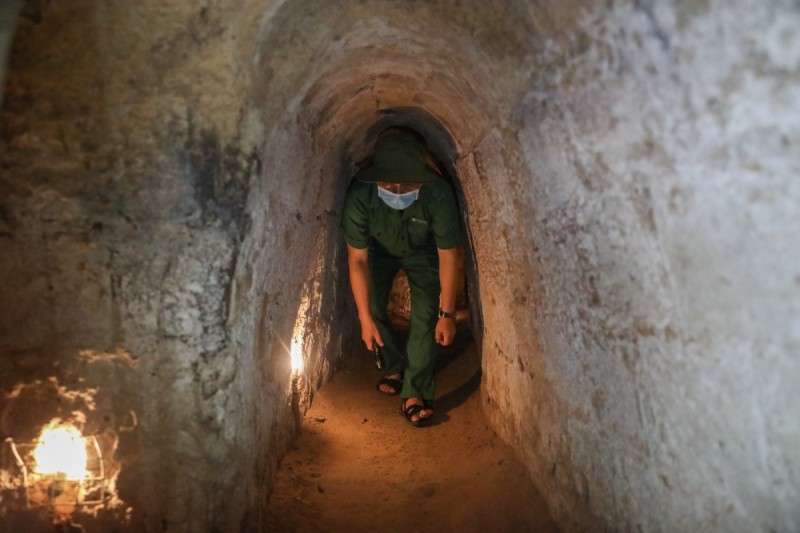
This is definitely the main attraction in Cu Chi Tunnels Historic Site. You will be able to visit and explore every corner of the 120m long tunnel system consisting of 2 floors; especially, experience the sweet potato, cassava, and ground tubers dipped with sesame salt that Hoang Cam’s kitchen made for local people and soldiers to eat in the past.
Cu Chi tunnel is built of laterite mixed clay, so its durability is very high, almost no landslide occurs. In addition, the vents are designed to be carved into the ground and discreetly camouflaged, so you can rest assured when you go sightseeing. However, because the path is quite narrow, sometimes you have to bend your back and move with your knees, which will make it a little difficult to breathe, so you should remember to consider your health and physical condition before participating. get in the tunnel.
2.Re-enactment area of Cu Chi liberated area
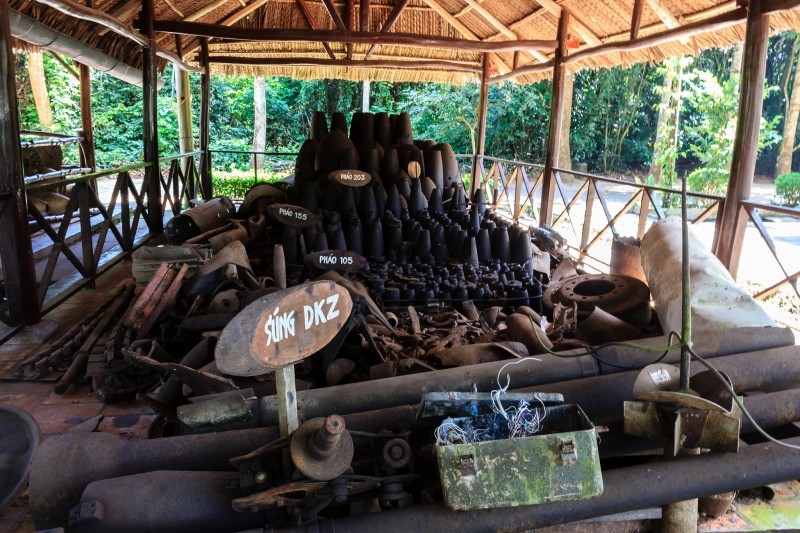
As the name suggests, this is where you can review documentaries about the glorious years of history of the soldiers and people of Cu Chi between 1961 and 1972. divided into three main spaces:
- Space 1: Recreate the fighting, working, studying, and daily life of Cu Chi people, cadres, and guerrillas through very vivid models.
- Space 2: Recreate the destruction of the village with shrapnel, bullet casings left on Cu Chi land, as well as the painful life of the people during the fierce war.
- Space 3: Recreate the desolate Cu Chi land, bare under the ravages of bombs and bullets, everywhere only the corpses of tanks, planes, and soldiers have to live underground.
3.Cu Chi water game and entertainment area
Located in the Re-enactment of Cu Chi liberated area, you can walk 15 minutes to visit a landscape lake simulating the East Sea, visit precious wooden forests and all three architectural models – symbols of the three regions: Pagoda One Pillar, Ngo Mon Gate and Ho Chi Minh Museum at Nha Rong Wharf.
In addition, you can swim in the pool, cycle around the lake, kayak… Each activity has a fee, so you need to buy a separate ticket if you want to play any game.
4.Cu Chi shooting range
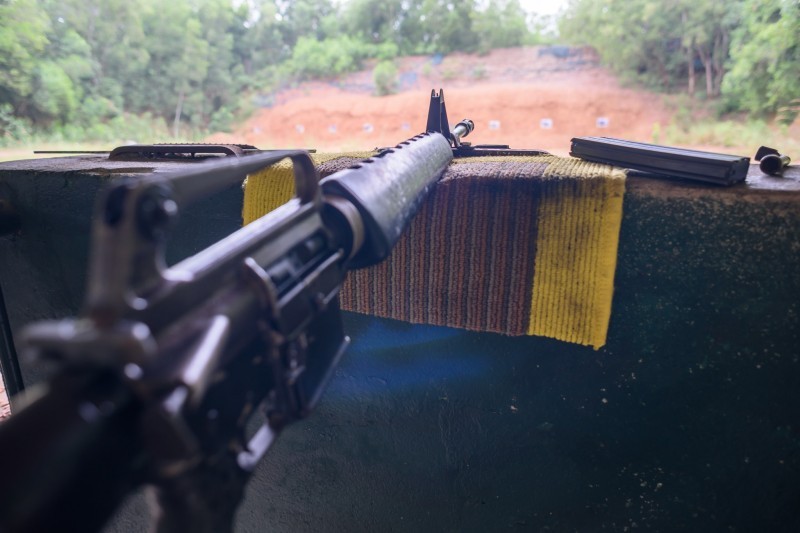
This is a place that attracts many young people and those who like to experience thrilling activities. There are two services for you to choose: defense sports shooting and paintball shooting.
With defense sport shooting, you can try your hand at shooting rifles, learn how to disassemble guns under the guidance of staff. Ammo prices for each type of gun range from 40,000 VND to 60,000 VND / bullet.
If you follow a large group and want to play as a team, then choose to shoot paintball guns. With this game, you have the opportunity to show your coordination skills with teammates, judgment ability, as well as reaction speed. The cost of this service is 50,000 VND/person for each 60-minute turn, and the price of ammo is 3,000 VND/round.
5.Cu Chi Wildlife Rescue Station
Although it is not part of the Cu Chi Tunnels Historic Site, if you travel by private vehicle, you can visit the Cu Chi Wildlife Rescue Station, which is also located on Provincial Road 15 along with Cu Chi Tunnels.
This is the largest wildlife hospital in the South, still saving about 3,600 rare animals. Therefore, visiting this place, you can not only visit the wild animals, but also learn the stories about them through the lifeguards.
Note when visiting Cu Chi Tunnels
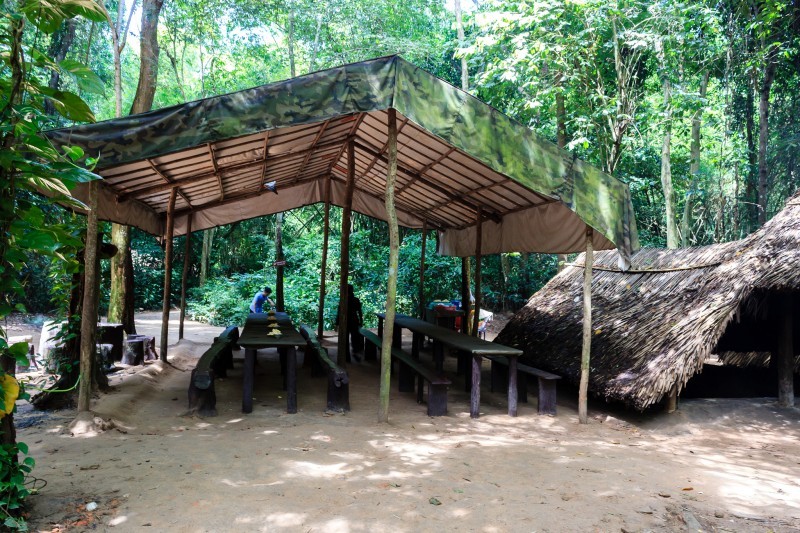
- Visiting Cu Chi Tunnels, you don’t need to worry about eating, because on the site of the relic there is a food court that provides drinking water and fish fast food; Or you can bring your own outside food and enjoy it on the spot like a picnic.
- In addition, on the way to Cu Chi tunnels, there are many delicious restaurants such as: Xuan Dao beef, Minh Quy pork vermicelli, Canh Dong Hoang restaurant, Quan Vuon areca, etc.
- If you have the courtesy to buy souvenirs from Cu Chi Tunnels Historic Site, you can visit a souvenir shop to buy some items made from bullet casings such as lighters, pens, lamps… or other handicrafts made from rattan and bamboo.
- When visiting the tunnels, you should choose neat, dark clothes, and sports shoes for easy movement.
- Don’t forget to apply sunscreen, and spray insect repellent to protect your skin.
Cu Chi Tunnels is proud to be a wonder of Vietnam’s unique military art, one of the symbols expressing the resilient and indomitable will of Cu Chi’s army and people. With a large area, green space and a variety of entertainment activities, Cu Chi tunnels are suitable as a weekend relaxation spot, combined with learning more about the country’s revolutionary history.
Hopefully with the sharing just now, you will have a journey to explore Cu Chi Tunnels in the most convenient and complete way! Don’t forget to visit our Travel guide to find out more places to eat and drink in Saigon and the surrounding area.
