1. Phở
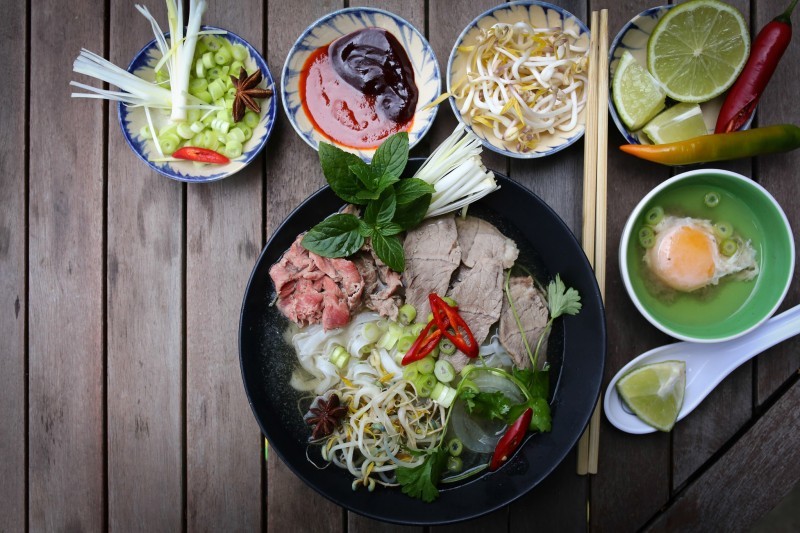
Pho is a dish that is present all over Vietnam, however, in each region, the taste of pho has certain changes. With Pho Saigon, you can feel the sweetness of sugar quite clearly. In particular, many Saigon people also cook broth with chicken bones and add dried squid, perhaps because of that, the broth of Pho Saigon is slightly cloudy, has a fatter and more greasy taste. Pho Saigon is usually served with lemon, fresh chili, coriander, basil, bean sprouts (blanched in boiling water or eaten raw), thinly sliced onions (can be soaked in vinegar). All of the vegetables, usually placed separately in a plate or basket sold with each bowl of pho, guests can take whatever they like and put it in their own bowl.
In addition to the main bowl of pho, they also have an extra sweet sauce (black sauce), red chili sauce and cup of fatty water (the fat of beef bones, in some places even blood juice) if customers want to add more fat and flavor inside the bowl.
2. Cơm tấm
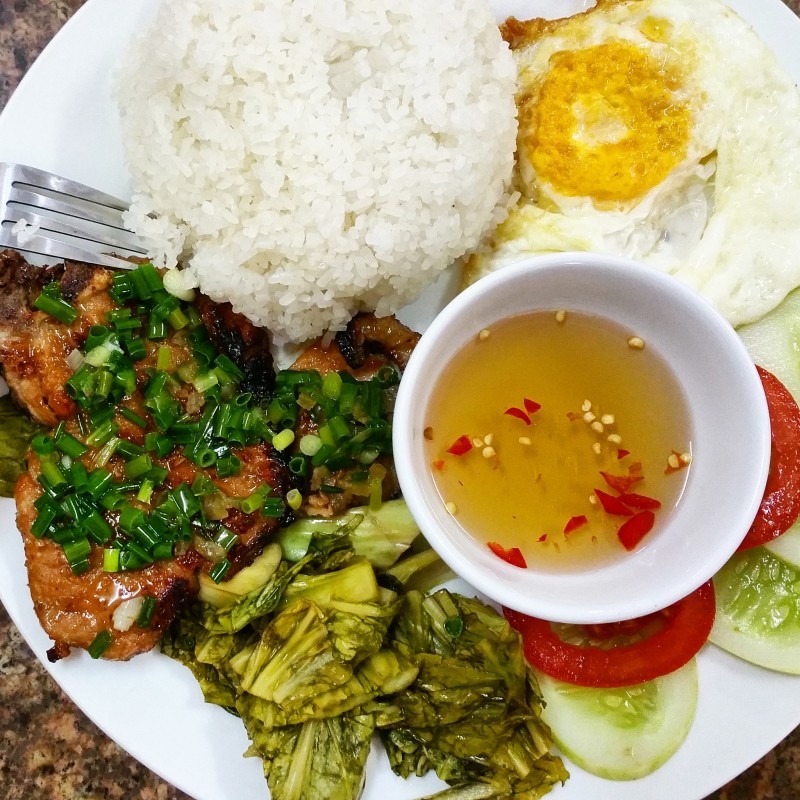
Com tam is a specialty dish of the people of the South. It is popular in many regions, especially Saigon. Currently, com tam dishes are available in all provinces of the country and abroad. Com tam is usually used for breakfast but sometimes people also enjoy it at noon or in the evening.
Com tam first appeared during the old regime in Vietnam, it can be considered as the quintessence of Vietnamese cuisine. Since ancient times, com tam was originally a popular dish only for the poor working class or students. People try to take advantage of broken grains (broken rice grains) in the milling process to cook rice.
In the past, Saigon com tam was used as a daily meal, served on a tray with chopsticks full of main dishes and side dishes. During that period, the city was always bustling with foreigners from many countries around the world. Therefore, Saigon people also change the layout of this dish to be more eye-catching, suitable for both domestic and foreign people. Since then, com tam and side dishes are presented on the same large plate and used with a spoon and fork when eating, similar to Western dishes. To this day, this way of decorating food and enjoying it is still preserved and becomes a feature.
A traditional plate of com tam includes: 1 part of rice, 1 part of grilled ribs, 1 part of pork skin, 1 part of egg rolls and dipping sauce.
3. Bánh xèo
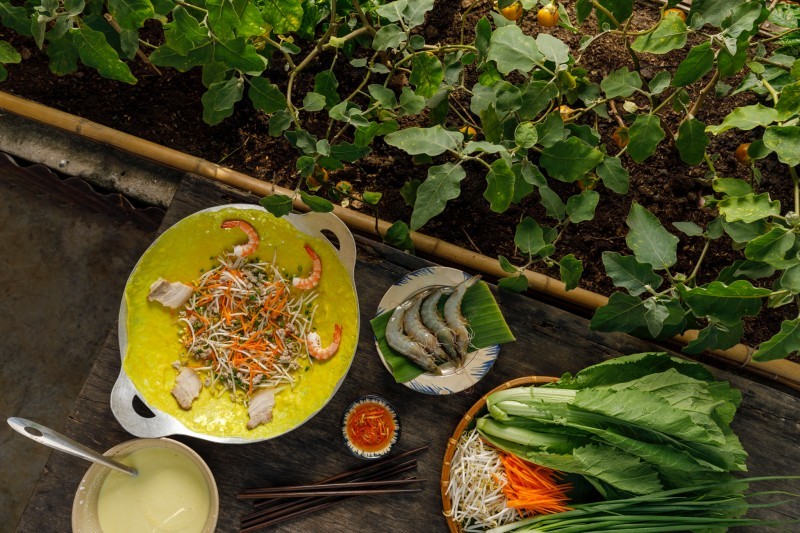
When it comes to Vietnamese cuisine, international friends often think of pho and banh mi, and recently, bun cha. But for us Vietnamese, there is another very familiar rustic dish that almost everyone loves – it’s banh xeo. Usually served on street corners or in modest small shops, this attractive cake is always one of the typical representatives of Vietnamese street food. And if asked, gourmets will answer that to understand banh xeo, one should not only know a particular version of a region.
The name “banh xeo” comes from the sound when the rice flour layer “landed” on a hot pan and fried until crispy. In each place, the cake has different sizes and ingredients, thanks to which we have many unique and delicious versions of pancakes. In Saigon, you will see huge banh xeo with fillings consisting of green beans, pork, shrimp, and bean sprouts, accompanied by a plate of raw vegetables and fresh herbs.
In fact, banh xeo has only become popular in Saigon in the past few decades. This dish was not known much during the 1960s and 1970s but until the 1980s, when workers from all over the country flocked to the city and in which there were many people from the central provinces. Banh xeo is gradually becoming popular thanks to its convenience. The cake is both delicious and encapsulated in a banana leaf train, once a meal that followed farmers to work in the fields. If asked, we will answer that street banh xeo provides one of the best dining experiences.
4. Bánh khọt
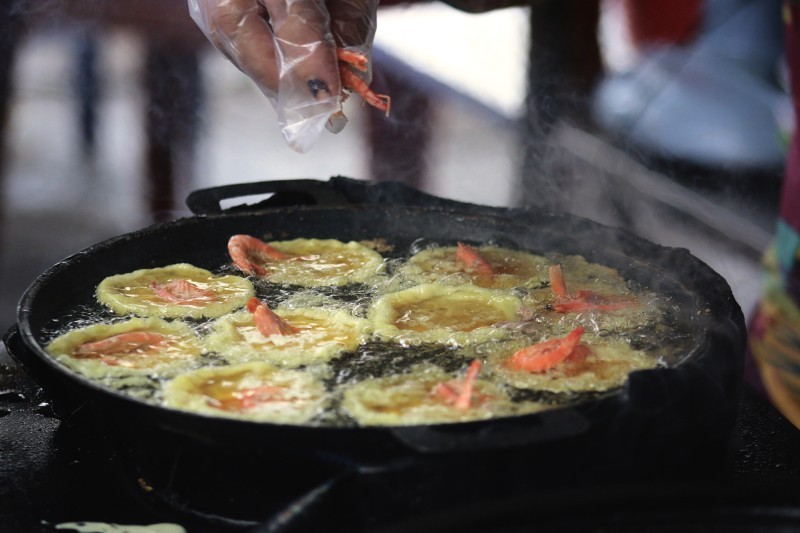
Saying “banh khot Saigon” only, but actually delicious and famous banh khot must be mentioned first in Vung Tau. But Saigon is the center of specialties of the region, so it is not surprising to see Vung Tau banh khot lying right in Saigon.
Banh Khot is made from ground rice into a powder and then mixed with coconut milk, chicken eggs and green onions, so the cake has a very rich and fragrant taste. Serve hot with raw vegetables and other herbs. Delicious cakes also partly depend on the skill of making dipping sauces of the owner.
Stepping into the shop, you will see a whole line of extremely professional cake making, all activities were clean and extremely accurate to every millimeter. The first step is to pour the dough into the mold on the stove. After coating a round of cooking oil into the mold, a person will hold a porcelain pot with a long spout (like a tea pot), pour the powder into each small mold and then cover the mold. These small molds are housed in a large cast iron tray (so each batch of banh khot produces a lot of cakes because of that). The person pouring the dough must be very skillful so that the dough does not fall out and at the same time the amount of dough in the molds must be equal, otherwise the batch of cakes poured out will be still alive or some will be burnt by the fire.
After completing the process of pouring the dough into the mold, the rest of the task weighs heavily on the shoulders of the oven keeper. This person will have to estimate the time for the dough to be cooked evenly and golden brown. In the heat of the embers, that person’s hand kept swinging around the mouth of the mold to put the shrimp in the middle of the cake. I sat waiting to see that scene and couldn’t help but feel guilty thinking that if I did the same, maybe I would have “eaten” it already.
Each batch of cooked cakes is artistically removed with just a “hand dance” through the mouth of the mold. The cake is sprinkled with yellow shrimp paste on top, so it is more evocative and sexy (sense) to diners.
5. Bò lá lốt
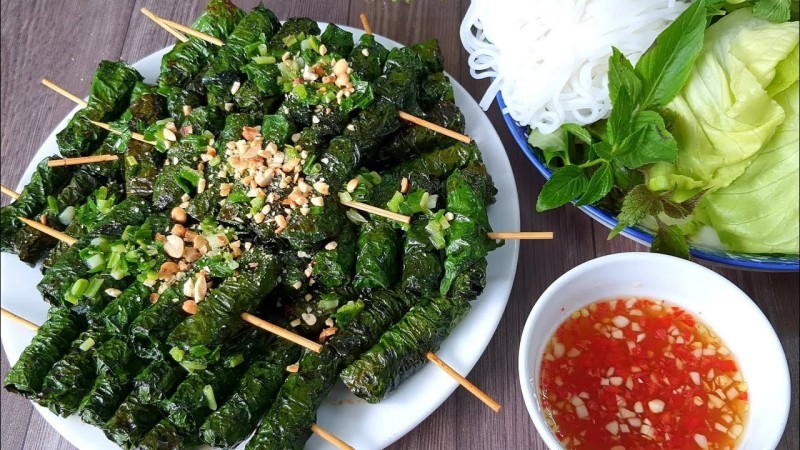
Grilled beef with guise leaves is one of the most famous Vietnamese street foods in the world. You can hardly ignore this rustic dish when visiting southern Vietnam, especially saigon.
Originating from the Southern region, the ingredients of this dish are also very simple including beef and guise leaves. The ground beef is fully seasoned with spices and the guise leaves are washed to ensure food hygiene and safety. A special feature is that this dish must be grilled on a charcoal stove to make it more delicious.
Grilled beef with guise leaves served with raw vegetables such as lettuce, basil, banana, cucumber, star fruit or rolled rice paper with fresh vermicelli. The greasy taste of marinated beef, the characteristic aroma of grilled guise leaves will make you irresistible when you pass by the sidewalk stalls on the streets of Saigon.
6. Bún bò Huế
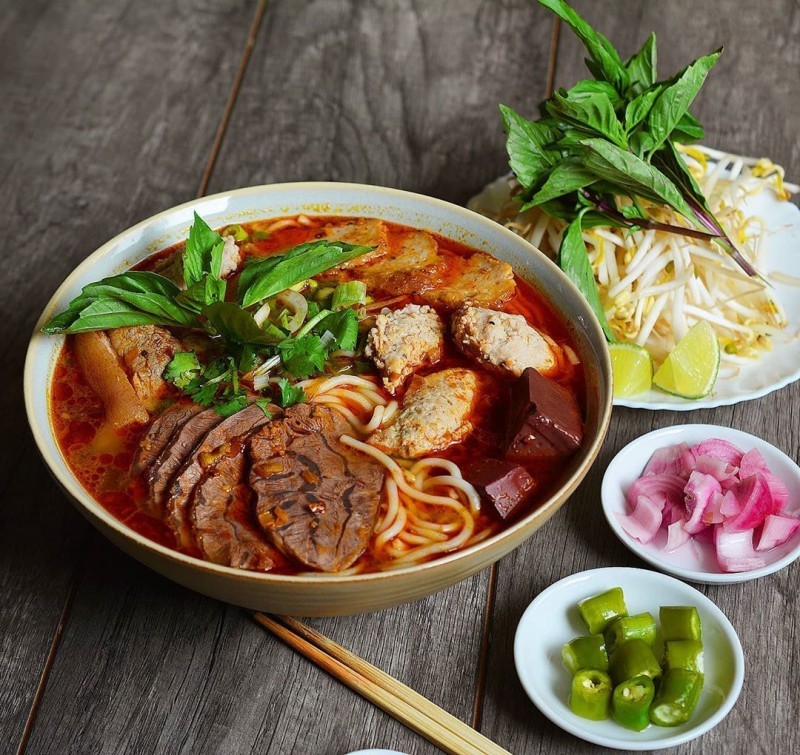
Bun Bo Hue is one of the specialties of Hue. However, this dish is carried everywhere by the people of Hue and we can find the taste of the locals right here in Saigon. I don’t understand why Saigon people are so fascinated and tired of beef noodle soup. From the street, the street to the last cave, the alley where you can smell the aroma of lemongrass and shrimp, you will know that the place will definitely sell beef noodle soup. Talking about beef noodle soup, Saigon can be likened to a “paradise” with a variety of schools. From the original taste of Hue beef noodle soup to the variations that create a novelty.
The main ingredients of this dish include vermicelli, beef, pork rolls and a distinctive red broth. The broth is carefully stewed from beef bones, seasoned with spices and chili powder, especially seasoned with fish sauce – a typical Hue fish sauce and the most important ingredient in creating a delicious bowl of beef noodle soup. In addition, the bowl of beef vermicelli can also be added with beef or crab cakes depending on the individual characteristics of the cook. The dish will be more delicious when served with raw vegetables such as bean sprouts, chopped bananas, chopped water spinach, lettuce, etc.
7. Bánh canh
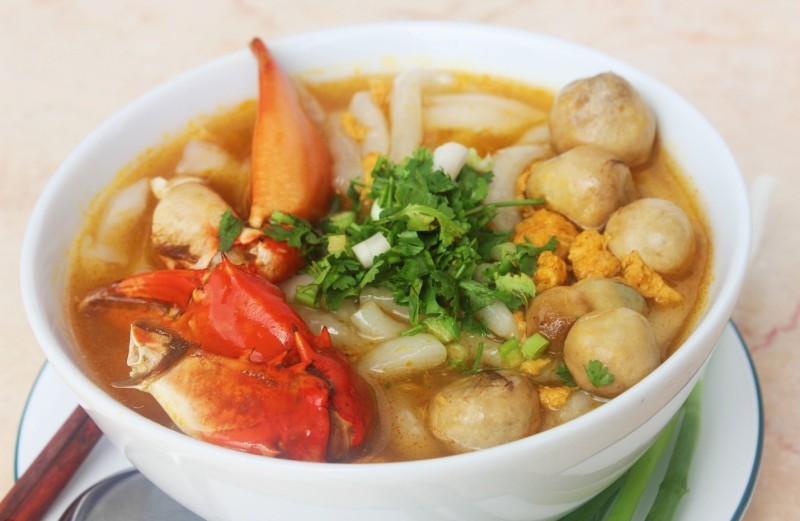
Banh canh is a rustic dish that has been present in Saigon for a long time, becoming more and more diverse, especially after the massive immigration wave for decades. There are few dishes that are as easy to eat and as diverse as banh cuon. Regardless of how different the methods and ingredients are in each locality, when it comes to banh chung, many people are confused and don’t know which type to choose. A good bowl of banh canh or not depends on three criteria: the stem of the soup, the broth and the combination of the accompanying ingredients.
Throughout Saigon, it is not difficult to find a restaurant with pork rolls, from popular brand chains to popular restaurants. It’s also strange to think that, no matter what ingredients are used for the stem of the soup, the bowl of banh chung is also delicious and attractive. Some afternoon, when hungry, try to stop at a popular roadside banh chung shop, surely we are rarely disappointed. A bowl of banh chung with a few slices of white radish, a few pieces of pork leg or a few chunks of crab meat is more than enough for a hunger.
8. Hủ tiếu gõ
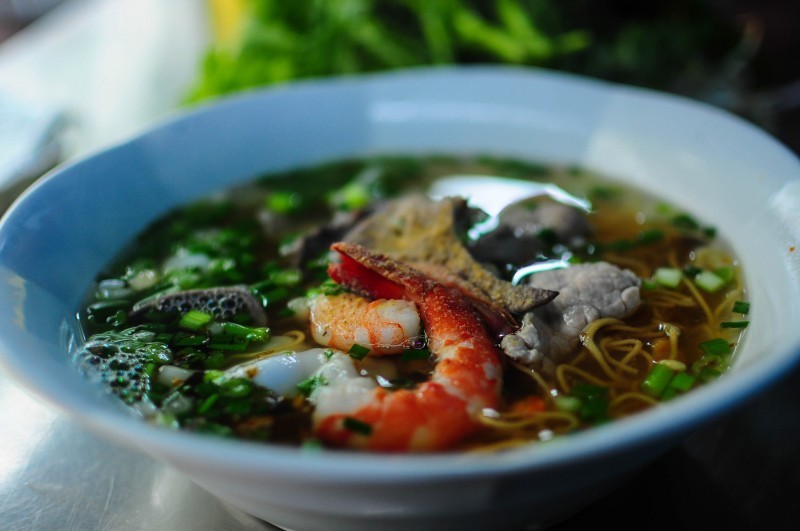
No one knows when Hu tieu go existed. But those who have ever lived in Saigon must have encountered the hu tieu trucks knocking on street corners and sidewalks every night, when they wanted to find a place to eat but the restaurants were closed. It is usually a small vehicle that is erected to be able to move easily. This vehicle is made very rudimentary and simple, some places also use motorbikes, bicycles …, when going, use a percussion instrument to make a “crack” sound so that customers can recognize it. The hu tieu truck just crept around the streets, corners, through schools, factories…
The ingredients of the bowl of hu tieu go are only “a little”: a little bit of noodles, a little thinly sliced pork, a little bean sprouts, a little chives, add a piece of fragrant fat… and then add the broth. It’s so simple, yet so attractive. The most special feature of the hu tieu go is the broth. The water is carefully simmered from pork bones and vegetables to create an attractive sweet taste. Therefore, even though the bowl of hu tieu go does not have much meat and is not full of fillings, it still attracts people to eat. Each bowl of hu tieu go only costs from 10,000 – 20,000VND … also full of noodles, vegetables, bean sprouts, thinly sliced pork, beef balls, some places also add quail eggs and a few pieces of sausage ( pig bone). Although not too full or full of filling like other types of noodle soup, it is enough for people to eat to warm their stomachs.
Most of the customers are poor laborers, workers, students or people with meager incomes… People choose hu tieu go because this is a simple dish with cheap price. One bowl is enough to dispel hunger. That’s why we say, hu tieu go was born for the poor. In the evening, if you come home late and come home hungry, stop at a hu tieu go truck by the roadside, eat while watching the magnificent Saigon streets at night, see how peaceful life is.
9. Banana cake
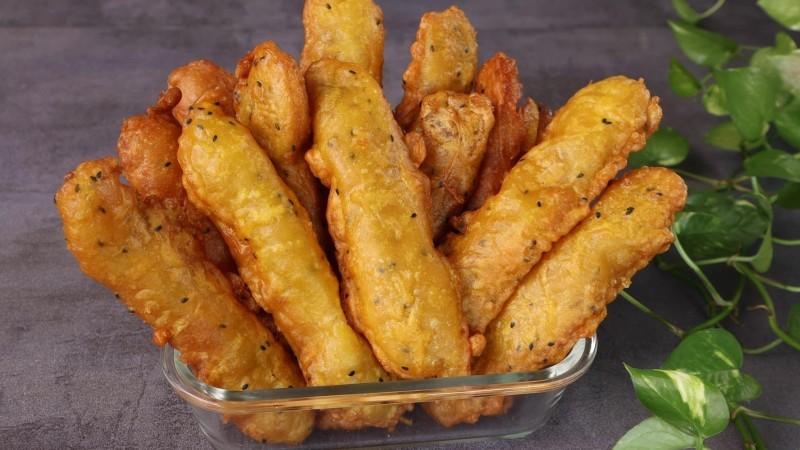
Fried banana cake is a popular street food in Saigon with its delicious crunchiness. If a fresh banana is easy to cause bloating, when combined with a crispy crust, it makes people want to eat forever. The banana is thick with flesh, rolled evenly and dipped in flour. After deep frying, it will create a golden crust and bring a completely new flavor.
Bite into the crispy, salty crust and then touch the sweet banana inside, all intertwined to bring out a delicious and attractive flavor. The hot banana cake has just drained the oil, just blow it up and slowly sip it to feel it. The taste is popular, but it adds a special feature to Saigon street food.
10. Snail dishes

Visiting Saigon without once sitting in a restaurant to eat snails, half of the trip has already been wasted. Hearing that, you will be surprised because Saigon is not a coastal city, nor famous for its typical snail dishes, so why must you eat snails? It can be said for only one reason, that is, Saigon people know how to enjoy the best things possible. Sitting and eating snails in addition to enjoying delicious and fresh dishes of snails prepared in a variety and attractive way, the feeling of sitting, eating, chatting with friends, watching the streets is what makes a “snail ceremony culture” of the Saigon people.
